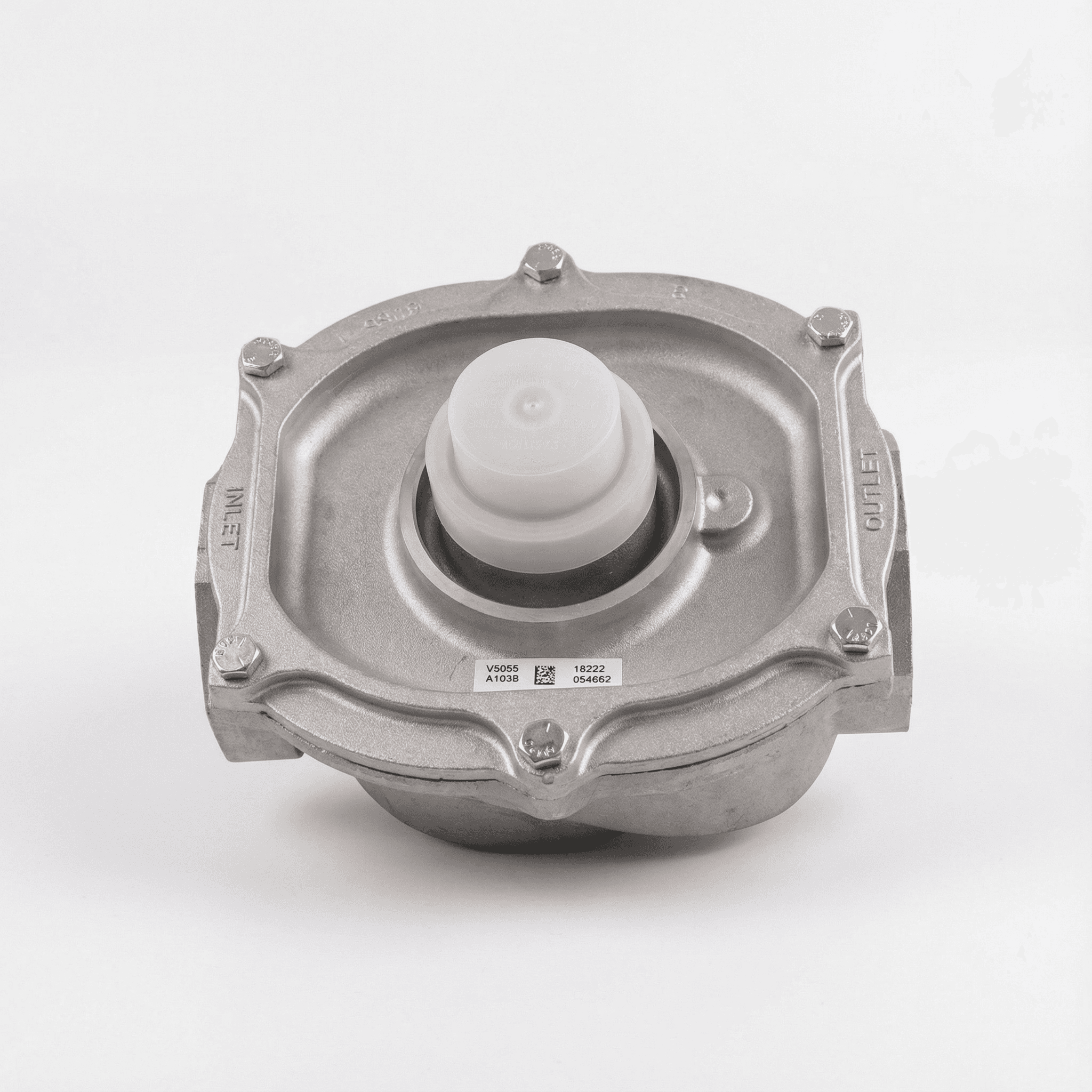
Siemens VRD Series
Industrial Gas Pressure Regulators for Stable Burner Operation. Ensuring consistent fuel delivery and combustion performance.
What is the Siemens VRD Series?
The Siemens VRD Series consists of industrial gas pressure regulators designed to maintain stable upstream or downstream gas pressure in combustion systems.
In industrial burner installations, stable gas pressure is essential for predictable fuel flow and consistent combustion performance. The VRD Series ensures that variations in supply pressure do not negatively impact burner operation.
Role in Combustion System Architecture
In a standard industrial gas train, the VRD regulator is typically installed upstream of control and safety valves to stabilize the gas supply.
The VRD Series stabilizes gas pressure before it reaches downstream safety and modulation components, acting as a foundational element for the entire fuel delivery system.
Why Gas Pressure Stability Matters
Fluctuating gas pressure may cause inconsistent air-fuel ratios, ignition instability, and flame oscillation. By maintaining a controlled pressure level, the VRD Series supports:
- Reliable ignition: Consistent gas availability for pilot and main flame.
- Stable flame supervision: Preventing nuisance trips due to pressure dips.
- Consistent modulation: Ensuring valve positioning corresponds to expected flow.
- Combustion efficiency: Maintaining the designed air-fuel mixture.
Typical Applications
VRD Series gas pressure regulators are widely applied in:
- Industrial gas burners
- Commercial boiler gas trains
- Process heating equipment
- Furnace gas supply systems
- Modulating burner assemblies
Pressure Stability
Maintains consistent outlet pressure regardless of inlet fluctuations.
Reliable Ignition
Supports stable pilot and main flame formation by ensuring steady gas flow.
Industrial Design
Robust mechanical construction suitable for harsh boiler room environments.
Wide Range
Available with various spring options to cover diverse pressure requirements.
Core Functional Characteristics
All VRD Series regulators share the following design principles:
- Mechanical pressure regulation: Reliable diaphragm and spring mechanism.
- Industrial pressure ranges: Designed for typical burner supply pressures.
- Stable outlet pressure: Minimizes hysteresis and drift.
- Robust housing: Built for industrial environments.
- Gas compatibility: Suitable for natural gas, LPG, and similar industrial fuels.
The regulator automatically adjusts its internal valve position to maintain consistent downstream pressure regardless of inlet fluctuation or flow demand changes.
All VRD Models
Integration with Other Combustion Components
VRD Series regulators are typically integrated with:
- Siemens VGD Series safety shutoff valves
- Siemens VGG Series regulating valves
- Gas pressure switches for high/low limit monitoring
The regulator provides a stable pressure foundation for these downstream control and safety components.
Selection Considerations
When selecting a VRD regulator, consider:
- Inlet gas pressure range: Ensure compatibility with supply.
- Required outlet pressure: Select appropriate spring range.
- Maximum gas flow: Match regulator capacity to burner demand.
- Connection size: Match existing pipework.
Proper pressure regulation ensures reliable burner performance and long-term system stability.
Selection Guide
Check maximum supply pressure rating.
Select spring range for desired burner pressure.
Ensure adequate flow at minimum pressure drop.
Technical Support
Unsure about spring selection? Our team can help specify the correct regulator configuration.
Contact an ExpertFrequently Asked Questions
What is the primary function of the Siemens VRD Series?
The Siemens VRD Series is designed to provide precise and reliable control for industrial combustion systems, ensuring optimal performance, safety, and energy efficiency across various heating applications.
How do I select the right model within the VRD Series?
Selecting the correct model depends on your specific application requirements, including operating voltage, required torque or capacity, and control logic (e.g., on-off vs. modulating). Refer to the model overview table above or contact our engineering team for technical assistance.
Are VRD Series components suitable for retrofitting existing systems?
Yes, Siemens designs the VRD Series with standardization in mind, making them excellent choices for both new installations and retrofitting older or legacy combustion systems to meet modern safety and emissions standards.