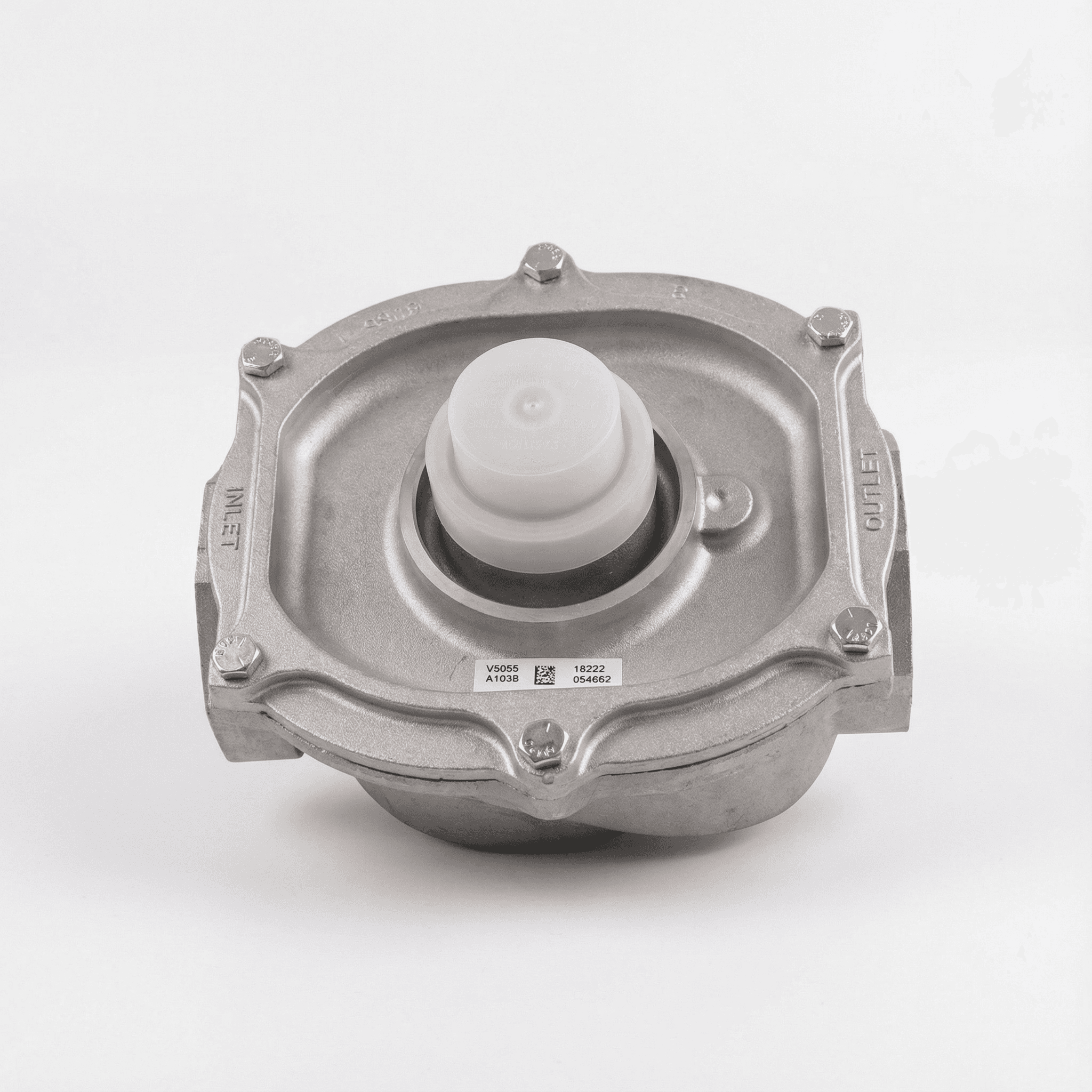
Siemens VKP Series
Gas Control Valves for Industrial Burner Fuel Regulation Systems. Supporting efficient combustion through precise flow modulation.
What is the Siemens VKP Series?
The Siemens VKP Series consists of gas control valves designed for regulating and controlling fuel gas flow in industrial and commercial burner systems. Unlike simple shut-off solenoid valves, VKP valves are used for controlled gas flow management, supporting stable combustion performance and precise fuel delivery.
Within a combustion control architecture, the VKP Series functions as a fuel regulation component positioned between the gas supply and the burner mixing system. It plays a key role in maintaining proper fuel-to-air ratio and supporting efficient combustion operation.
How does the Siemens VKP Series work?
In a typical industrial gas burner configuration, VKP control valves operate together with:
- Burner control units (e.g., LME, LDU, LMV systems)
- Actuators or modulating control motors
- Air dampers
- Gas solenoid shut-off valves (e.g., VKF Series)
- Gas pressure switches (e.g., QPD Series)
Operational sequence:
- Safety conditions verified.
- Safety shut-off valves (VKF) open.
- VKP valve regulates gas flow according to burner demand.
- Air damper and gas valve operate in coordination.
- Flame supervision ensures stable combustion.
The VKP Series therefore supports modulation and fuel control rather than acting as a primary safety shut-off device.
Typical Applications
VKP Series gas control valves are commonly used in:
- Modulating industrial gas burners
- Commercial boiler systems
- Process heating equipment
- Furnace and oven combustion systems
- Applications requiring variable fuel input
They are especially suitable for installations where precise gas flow adjustment is necessary to optimize combustion efficiency.
Precise Modulation
Enables accurate control of gas flow rates to match burner load requirements.
Combustion Efficiency
Supports optimal fuel-to-air ratio maintenance for cleaner and more efficient operation.
Core Technical Characteristics
Although individual models differ in capacity and configuration, VKP Series valves typically feature:
- Gas Flow Regulation: Linear or characterized flow control for precise modulation.
- Actuator Integration: Designed to work seamlessly with electric or hydraulic actuators.
- Combustion Optimization: Engineered to help maintain consistent fuel-to-air ratios.
- Robust Construction: Stable performance under industrial operating conditions.
- System Compatibility: Direct integration with Siemens burner control environments.
Model Differentiation Logic
Different VKP models are primarily distinguished by:
- Nominal diameter and flow capacity
- Operating pressure range
- Mechanical configuration
- Compatibility with specific actuator types
- Intended burner capacity range
Model selection depends on burner size, required modulation range, fuel type, and integration with the combustion control system.
All Models
Proportional Control Devices
Safety and Control Positioning
Within a combustion system architecture:
VKF Series (Safety) → VKP Series (Regulation)
Operational hierarchy:
- Air Verified
- Gas Pressure Verified
- Safety Valve Open (VKF)
- Fuel Regulation (VKP)
- Flame Confirmed
- Continuous Supervision
This structure clarifies that VKP valves are performance-control devices operating within a safety-supervised environment.
Selection Guide
Precise gas flow modulation for optimal combustion.
Designed for seamless operation with Siemens burner controls.
Maintains accurate fuel-to-air ratios for cleaner burning.
Optimization Support
Need to optimize your combustion efficiency? Our experts can help with valve selection and sizing.
Contact an ExpertFrequently Asked Questions
What is the primary function of the Siemens VKP Series?
The Siemens VKP Series is designed to provide precise and reliable control for industrial combustion systems, ensuring optimal performance, safety, and energy efficiency across various heating applications.
How do I select the right model within the VKP Series?
Selecting the correct model depends on your specific application requirements, including operating voltage, required torque or capacity, and control logic (e.g., on-off vs. modulating). Refer to the model overview table above or contact our engineering team for technical assistance.
Are VKP Series components suitable for retrofitting existing systems?
Yes, Siemens designs the VKP Series with standardization in mind, making them excellent choices for both new installations and retrofitting older or legacy combustion systems to meet modern safety and emissions standards.